 A2A Fans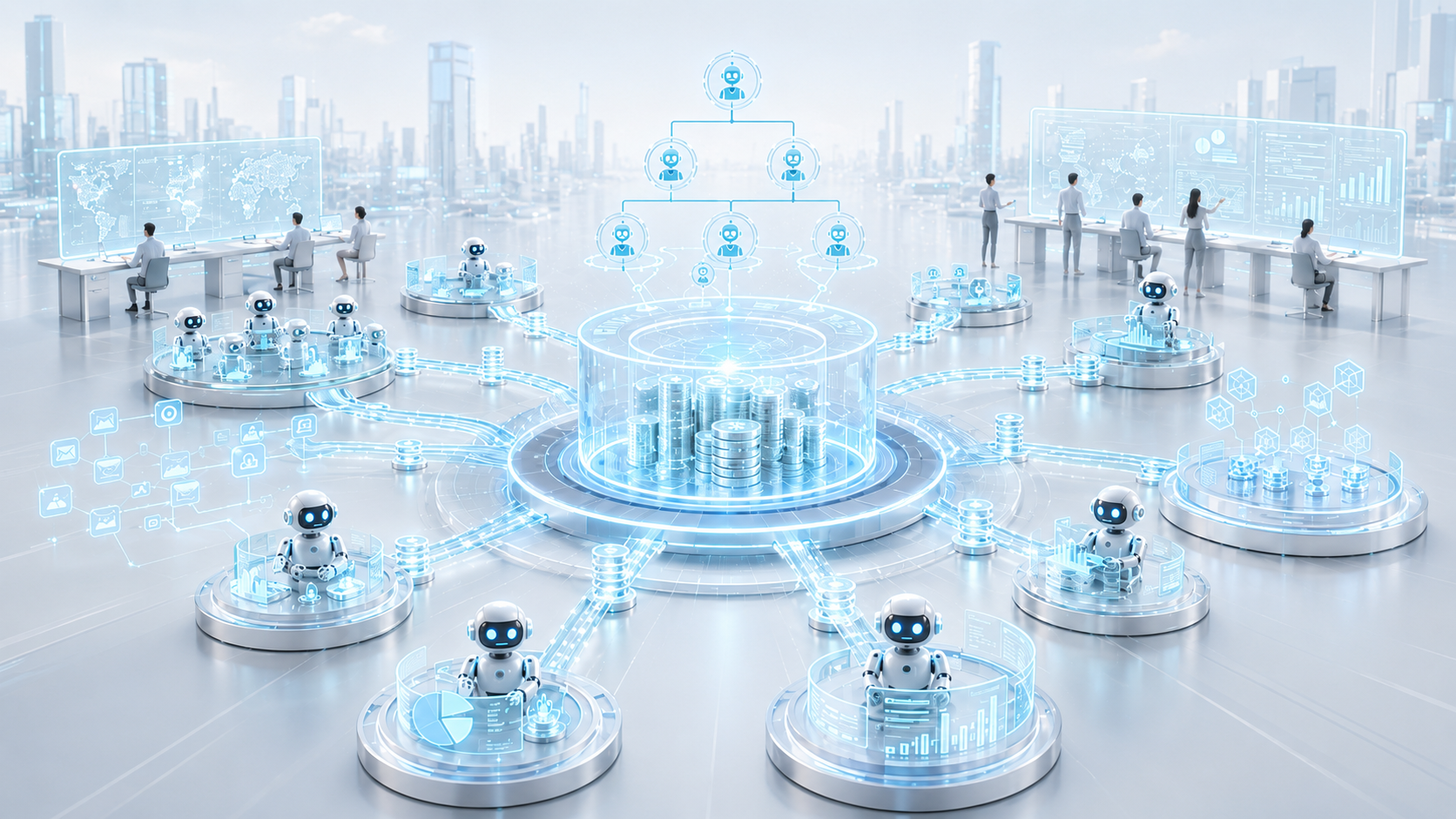
Introduction
Large language models generate fluent text, but they can invent facts with complete confidence. In demos, this is amusing. In commercial applications, customer support, finance, legal, healthcare, or internal knowledge systems, it creates real risk. A wrong policy quote, fabricated contract term, or outdated product claim can damage trust, trigger compliance issues, or cost money. AI grounding solves this by forcing the model to base its answers on verified, retrievable sources instead of relying only on its training data.
The model still handles language and reasoning, but the facts come from controlled knowledge bases, documents, databases, or live systems. Retrieval-Augmented Generation (RAG) is the most common implementation, yet grounding is the broader goal: accuracy, traceability, and control. This matters more as organizations move from chatbots to AI agents that plan, call tools, and complete multi-step work. An ungrounded agent can compound errors across actions. Grounding keeps commercial systems usable and auditable.
Key Takeaways
Grounding anchors AI outputs to verified external sources rather than pure training data.
RAG is the primary technique, but grounding also includes knowledge graphs, constrained generation, verification layers, and tool use.
It reduces hallucinations, improves currency of information, and makes answers traceable.
Commercial systems still need evaluation, human review for high-stakes cases, and ongoing data maintenance.
Agents benefit most when grounding is combined with clear task loops, tools, and acceptance checks.
What Is AI Grounding?
AI grounding refers to the method of linking a model’s generation process to reliable and current source material that can be trusted. Rather than relying solely on parametric knowledge, which is essentially what the model “remembers” from its training phase, the system takes a more sophisticated approach. It first retrieves pertinent facts from its sources and then generates a response that is strictly limited to that material. To illustrate this concept, consider the difference between an employee who answers questions purely from memory and one who takes the time to consult the company handbook, customer relationship management (CRM) system, or policy database before providing an answer.
In this scenario, the model is responsible for delivering fluency and synthesizing information, while the sources it references are responsible for ensuring the accuracy and truthfulness of the information provided. It is important to note that grounding does not completely eliminate all errors that may occur. However, it significantly reduces the frequency of unsupported claims and transforms any remaining mistakes into something that can be audited against specific documents. This means that while some inaccuracies may still exist, they can be traced back to the original sources, allowing for greater accountability and verification of the information presented.
How Grounding Works
A typical grounded system has three layers:
- Source of truth: Curated documents, knowledge bases, databases, APIs, or structured data the organization controls.
- Retrieval layer: Semantic search (usually over vector embeddings) or structured queries that surface the most relevant passages for a given input.
- Constrained generation: The model receives the retrieved context plus instructions to answer only from that material, cite sources, and admit uncertainty when the context is insufficient.
RAG implements this pattern cleanly: retrieve → augment the prompt → generate. Other approaches include knowledge graphs for relationship-aware retrieval, live web or API calls for real-time data, and post-generation verification that checks claims against sources. In agent systems, the same principle applies at every step. An agent planning a multi-step task can ground intermediate decisions by retrieving policy rules, customer records, or inventory data before acting.
Why Hallucinations Happen and Why Grounding Helps
Models are designed to predict the most plausible next tokens based on the patterns they have learned during their training. However, when they encounter situations where information is missing, outdated, or ambiguous, they tend to fill in those gaps with content that, while statistically likely, may not be grounded in reality and could be entirely invented. This issue is further exacerbated in commercial environments, where the stakes are significantly higher. Factors such as proprietary data, the need for frequent updates, the use of specialized domain jargon, and the potential consequences of inaccuracies can amplify the problem, leading to even greater challenges in ensuring the reliability and accuracy of the generated content.
Grounding reduces this by:
Supplying current facts the model never saw in training.
Narrowing the generation space to supported claims.
Enabling citations so humans can verify.
Allowing organizations to update knowledge without retraining the model.
Studies and production reports commonly show RAG-based grounding cutting hallucination rates substantially (often in the 40–70% range depending on data quality and evaluation method), with further gains from verification layers and constrained decoding.
Grounding vs RAG vs Agents
RAG, or Retrieval-Augmented Generation, is a sophisticated technique that serves as a foundational approach to achieving effective grounding, which is the desired outcome. There are various methods to ground models, including but not limited to pure prompt engineering, fine-tuning on specific domain data, making tool calls, or utilizing knowledge graphs. Among these methods, RAG stands out as the most practical and accessible starting point for the majority of commercial teams. This is largely due to its modular nature, its ability to be updated easily, and the fact that it does not necessitate constant retraining of the model, which can be resource-intensive and time-consuming.
However, it is important to note that RAG alone is frequently insufficient for accomplishing real-world tasks effectively. In practice, real tasks demand a comprehensive approach that includes careful planning, the use of various tools, multi-step execution processes, collaboration among team members, and the ability to close the loop on delivery and acceptance. This is where agents come into play, as they add essential capabilities that enhance the overall functionality of the system. Consequently, grounding becomes a critical piece of infrastructure, ensuring that the plans and actions of the agent remain aligned with and faithful to the enterprise data that is available.
The implementation of MCP -style tool connections and the establishment of agent collaboration patterns significantly bolster the grounding process. These enhancements allow agents to fetch live data in real-time or to hand off specialized subtasks to other agents, rather than resorting to the invention of intermediate results that may not be accurate or reliable. This collaborative and dynamic approach ultimately leads to more effective and trustworthy outcomes in various applications.
Practical Commercial Examples
Customer support: Retrieve the exact policy or product document, generate the reply, and attach the source. Reduces invented refund rules or feature claims.
Internal knowledge assistants: Answer “What is our current SLA for enterprise customers?” from the live knowledge base instead of an outdated training snapshot.
Financial or compliance reporting: Ground summaries in the latest filings or regulated data feeds; require citations for every material claim.
Agent workflows: An agent preparing a content publishing or data-cleanup task first retrieves the brand guidelines, acceptance criteria, and required data fields before executing.
In each case, the commercial value is lower risk, faster trusted answers, and easier audit trails.
Benefits for Commercial Applications
Lower factual error rates and reduced liability.
Answers stay current without full model retraining.
Traceability: every claim can point back to a source.
Better employee and customer adoption because trust increases.
Easier governance: edit the knowledge base rather than retrain.
Limitations and Remaining Risks
Grounding is fundamentally dependent on the quality of the underlying data. If the documents are poorly chunked, if there is incomplete coverage of the necessary information, or if the retrieval process fails to capture key passages, the resulting answers will inevitably be incomplete or skewed. Additionally, models can misinterpret context or make overgeneralizations, leading to inaccuracies. In high-stakes domains, it remains essential to have human review gates to ensure the reliability of the information.
Furthermore, live retrieval processes can introduce additional latency and costs that must be considered. Knowledge bases also require ongoing maintenance and strict access control to ensure their effectiveness and security. While grounding significantly reduces the occurrence of hallucinations in generated responses, it is important to note that it does not create perfect systems. There will always be limitations and risks associated with relying solely on automated processes without human oversight.
Best Practices
Start with high-quality, well-structured source material and clear chunking/metadata.
Combine retrieval with strong system prompts that demand citations and uncertainty statements.
Add verification: faithfulness checks, claim-source matching, or secondary models that score consistency.
For agents, ground every critical decision point and keep human checkpoints for permissions, publishing, or financial actions.
Measure continuously: retrieval precision, answer faithfulness, citation accuracy, and end-to-end task success.
Prefer modular architectures so you can swap retrieval methods or add knowledge graphs without rebuilding everything.
Future Perception
Grounding is becoming standard infrastructure rather than an optional extra. Expect tighter integration with agent frameworks, higher-fidelity multimodal grounding, graph-enhanced retrieval for multi-hop reasoning, and automated correction layers that fix residual errors. As agents move into longer-running task loops, continuous grounding against live systems and acceptance criteria will be essential for reliable commercial deployment.
Conclusion
AI grounding turns generative models from plausible storytellers into systems that can be trusted with real business information. By anchoring generation to verified sources—most often through RAG and related techniques- organizations reduce hallucinations, keep answers current, and create auditable outputs.
For teams building commercial applications or moving toward agents, grounding is not a nice-to-have feature. It is the foundation that lets models and agents participate in actual work without inventing the facts they need. Combine it with clear task definitions, tool access, and human review where stakes are high, and the path from demo to production becomes far more reliable.
Frequently Asked Questions
- What is the difference between AI grounding and RAG?
Grounding is the goal of tying outputs to verified sources. RAG is the most widely used architecture for achieving that goal through retrieval before generation.
- Can grounding completely eliminate hallucinations?
No. It significantly reduces them and makes remaining errors traceable, but data quality, retrieval accuracy, and model behavior still matter.
- Is grounding only useful for chatbots?
No. It is even more important for agents that plan and act, because errors can compound across steps.
- How does grounding help commercial AI applications specifically?
It reduces legal and reputational risk, keeps answers aligned with current company data, and supports compliance through citations and audit trails.
- Do I need to fine-tune a model to get grounding?
Usually not. Retrieval plus constrained prompting works for most cases and is easier to maintain than fine-tuning.
- What data sources work best for grounding?
Controlled internal documents, knowledge bases, databases, and approved APIs. Public web data can help for general facts but requires careful filtering for enterprise use.
- How should teams measure grounding success?
Track faithfulness (does the answer stick to the retrieved context?), citation accuracy, retrieval relevance, and downstream task success rates.
- Where should human review still occur?
High-stakes decisions, public-facing content, financial or legal commitments, and any action that changes system state or customer data.
Practical recommendation: Begin with a focused RAG pipeline over your highest-value knowledge sources, enforce citation and “I don’t know” behavior in prompts, evaluate rigorously, then extend grounding into agent workflows with tool access and acceptance loops. This sequence delivers reliable commercial value faster than trying to solve every edge case at once.